Ten Things I Hate About Calorie Counting Apps
This is sadly not an original experience. You open Instagram or TikTok. Maybe you’re seeing if Taylor has posted her wedding photos yet. Or maybe you’re checking in to see WTF is going on with Sydney Airport right now (IYKYK). Instead, in just a few swipes you find yourself being told by someone on the other side of the screen that they’re the authority on health. They’re suggesting that the secret to better health is simple: download an app, track your calories, hit your macros and log everything you eat. It’s just that simple!
The appeal is obvious. Calorie counting apps promise certainty. They gives us numbers, targets and rules to follow. In a world where nutrition often feels confusing, being told that health can be reduced to a daily budget of calories is incredibly reassuring. And look, I'm not here to argue that calories don't matter. They do. Our bodies need energy, and energy balance is a real thing. But somewhere along the way, we've confused understanding calories with counting them.
As a dietitian, I've seen countless people spend months, sometimes years, logging every bite. Yet despite all that effort, many are still struggling with the very things they hoped tracking would solve: poor body image, confusing gut symptoms, low energy, inconsistent eating habits, guilt around food and a constant feeling that they're somehow "doing it wrong".
Which is why I've developed a bit of a love-hate relationship with calorie counting apps. Actually, scrap that. Mostly hate.
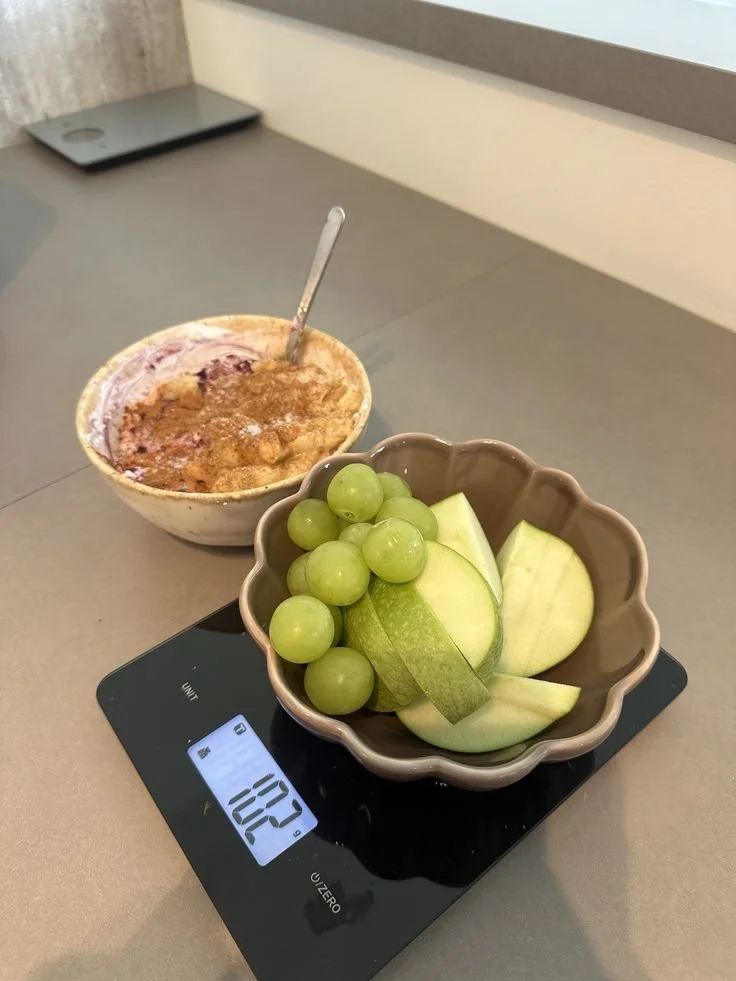
TEN THINGS I HATE ABOUT CALORIE COUNTING APPS.
ONE: Calorie counting encourages you to trust an app more than your own body.
Starting off strong with one of my biggest gripes. At its core, calorie counting asks us to outsource eating decisions to a number. Instead of asking ourselves whether we're hungry, satisfied, energised or recovering well, we're encouraged to ask whether we've stayed within our calorie budget. The problem is that our bodies don't operate according to the arbitrary numbers generated by an app. Hunger is influenced by training load, sleep, stress, illness, hormones and recovery demands.
Over time, this can disconnect us from one of the most valuable nutrition skills we have: recognising and responding to our body's signals. If you're hungry at 8pm but your app says you've already eaten enough, who should you listen to? Personally, I'm backing the millions of years of human biology over the smartphone.
TWO: Food was never meant to be a maths problem.
Food is one of the few things in life that is simultaneously biological, social, cultural and emotional. It fuels our bodies, but it also helps us celebrate milestones, connect with family, maintain traditions and experience joy. Calorie counting reduces all of that complexity to a number. When every meal is judged according to whether it "fits" your calorie budget, food can quickly become something to control rather than something to experience. The family recipe becomes a calorie calculation. The birthday cake becomes a negotiation. Dinner out with friends becomes an exercise in estimating portion sizes.
THREE: It rewards restriction instead of nourishment.
It’s subtle, but it’s there. Calorie counting rewards eating less, not necessarily eating well. Ever noticed that if you stay below your calorie target, you get a reassuring green bar. Go over and suddenly you're staring at red numbers. It's hard not to interpret that as success and failure, even when no actual health outcome has changed. The problem is that your body doesn't care whether you finished the day with a green bar. It cares whether you've consumed enough energy, protein, fibre, vitamins, minerals and carbohydrates to support your health and wellbeing.
Nutrition is about adequacy, not deprivation, yet calorie counting often blurs that distinction. It’s like the adult version of receiving a gold star for “good behaviour.”
FOUR: Calorie counting creates an illusion of precision.
One of the reasons calorie counting feels so convincing is that it appears scientific. After all, numbers feel objective. The reality is far less precise. Your calorie target is usually generated from a prediction equation based on a handful of variables such as age, height, weight and activity level. It doesn't know how stressed you are, how much sleep you've had, whether you're recovering from illness, where you are in your menstrual cycle or how hard you've trained this week.
Then there's the food itself with nutrition labels often containing permitted margins of error. Restaurant meals are estimates and tracking databases often contain duplicate or inaccurate entries. Even if every number was perfectly correct, the human body doesn't absorb calories with the precision of a calculator. Digestion, food structure, cooking methods and individual physiology all influence how much energy is ultimately available to us.
FIVE: It can make people obsess over food.
Most people start tracking with good intentions. They want to be healthier and more informed. But for some people, tracking slowly shifts from being a tool to becoming a preoccupation. Suddenly you're scanning every barcode before you eat, estimating restaurant meals, checking menus before social events and feeling uneasy when you can't track something accurately. Food begins taking up far more mental space than it deserves and the irony is that the people who become most diligent with calorie counting are often the same people who least need another rule to follow.
SIX: It completely misses the nuance of nutrition.
I often joke with clients about how my tendency to answer a question always starts with “well, it depends.” But that’s because it truly does depend! There is so much nuance required when we talk about our individual nutrition needs.
Let's say you've hit your protein target for the day. Firstly, slay. But secondly, did you spread that protein intake evenly across meals? Did you consume whole food protein sources? Were the protein sources a adequate source of iron? Also, is the protein target you’re shooting for even accurate?
Nutrition isn't simply about totals at the end of the day. Timing matters. Distribution matters. Food quality matters. Individual needs matter. A calorie tracking app can tell you how many grams of protein you've eaten but it cannot tell you whether your overall eating pattern supports your goals. The more you learn about nutrition, the more you realise how much context matters. Apps aren't particularly good at context.
SEVEN: Apps don’t teach you the skills that actually matter.

You can become incredibly good at tracking calories without becoming particularly skilled at eating. Knowing the calorie content of your lunch doesn't automatically teach you how to build a balanced meal, how to navigate social events, fuel training, manage hunger or eat consistently during busy periods. Many people become experts at logging food while remaining completely disconnected from the habits that support long-term health. The goal shouldn’t be to become better at using MyFitnessPal but rather to become better at feeding yourself. Those two things are not the same.
EIGHT: It can damage your relationship with food.
Calorie counting can easily create a dynamic where every eating decision feels loaded with meaning. Stay under your target and you feel successful, but god forbid if you go over and you feel guilty.
I've worked with countless people who no longer trust themselves around food because they've spent years relying on external rules to tell them what is acceptable. A healthy relationship with food involves flexibility, enjoyment and being able to eat a meal without mentally calculating its nutritional value. Unfortunately, calorie counting can sometimes move people further away from that.
NINE: It often distracts from the bigger picture.
At risk of sounding like a broken record, when people become focused on calories, they can lose sight of everything else that influences health. Sleep, stress, movement, recovery, social connection, food variety, meal timing, eating enough fruits and vegetables and regular meals. This is not an exhaustive list (I could honestly keep going!). The truth is, these factors rarely make headlines because they aren't as easy to package into a screenshot or tracking app. But they matter usually far more than whether your lunch was 450 calories or 550.
TEN: Most people don't need it.
Ultimately, the first nine reasons have led to this one. Calorie counting is often presented as the default approach to healthy eating, weight management and nutrition. I simply don't think that's true. For most people, the benefits are relatively small while the costs can be significant. The time, mental energy and emotional investment required often outweigh any additional insight gained.
Would I rather someone spend their energy learning how to recognise hunger, build balanced meals, eat enough fibre and fuel exercise properly? Well, yes. Because the people I see succeed long term are rarely the people who become exceptional calorie counters. They're the people who learn how to trust themselves around food and that's a skill no app can teach.
Final Thoughts
If you've made it this far, you're probably thinking one of two things:
"Michelle, this is a wildly dramatic response to a food tracking apps" or
"Finally, someone said it."
The truth is that calorie counting isn't inherently good or bad. Like most nutrition tools, it depends on how, why and when it's being used (remember reason six about nuance!!!). However, for many people, calorie counting creates more stress than insight, more food obsession than food freedom and more focus on numbers than on behaviours that actually support health.
The goal of nutrition shouldn't be to become the world's best calorie counter. It should be to build a way of eating that supports your health, performance, digestion and quality of life while still allowing room for flexibility, enjoyment and being a functioning human. And in my professional opinion, that starts by paying less attention to an app and more attention to what's happening on your plate, in your body and in your life.

This article was written by Michelle Keaughran.
Michelle is an Accredited Practising Dietitian, Sports Dietitian and founder of The Digestion Co. She spends her days helping people navigate everything from digestive concerns to sports nutrition.
When she's not making lists of “10 things I hate about…” or in the TDC clinic, you'll probably find her running, hanging out with her labradoodle Donny or forgetting bin night (again).